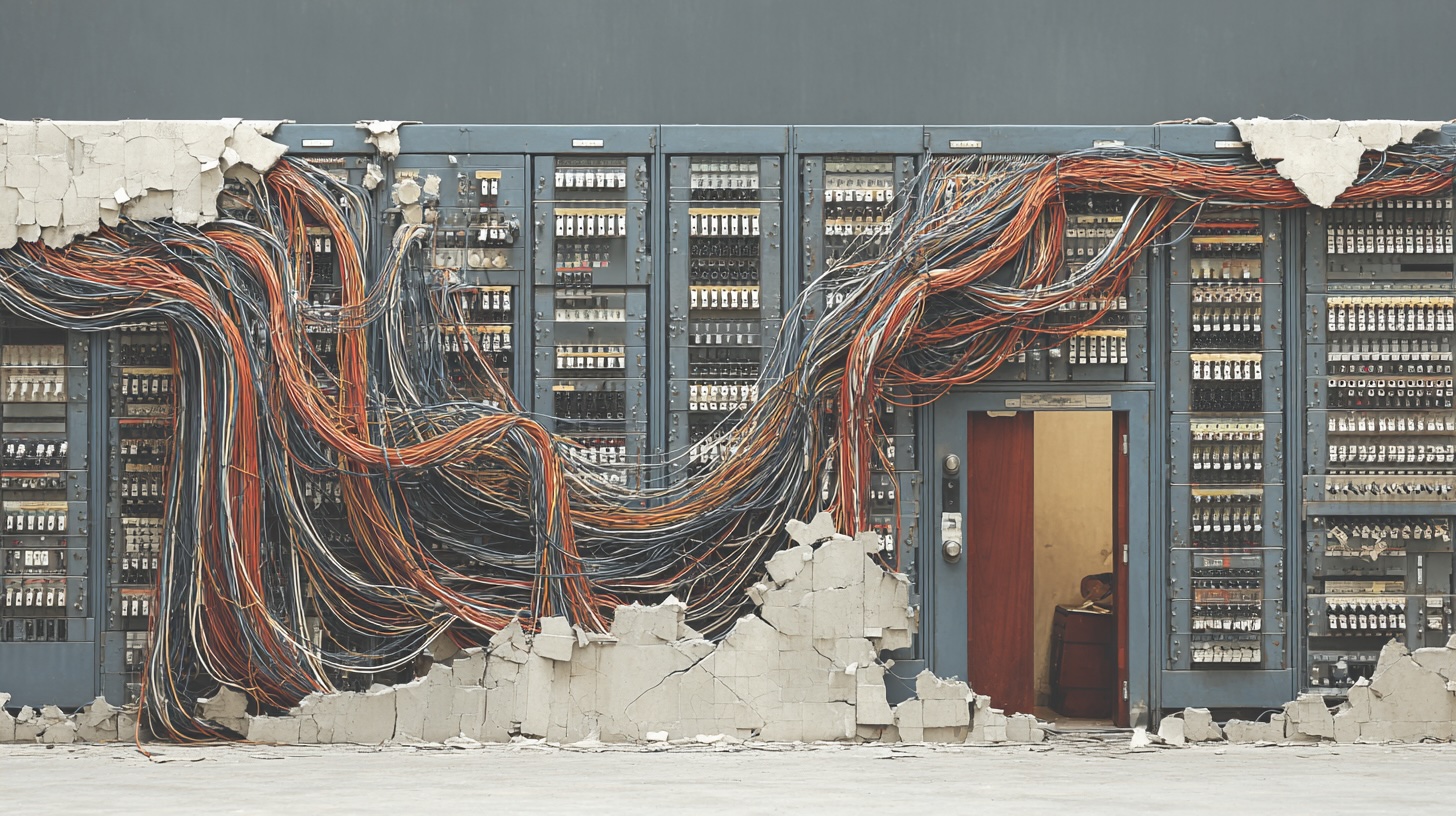
Here’s what I keep running into. An operator tells me — sincerely, with conviction — that their edge over the REITs is customer service. Personal relationships. The human touch. Then they walk me through the new kiosk rollout, the AI call routing, the plan to cut on-site hours. And they don’t seem to notice the contradiction.
I think this is a real problem. Not because automation is wrong, but because the story operators are telling about their strategy doesn’t match the decisions they’re actually making. Storable’s 2026 industry survey — 454 US operators — puts a number on it: 78% plan to compete primarily through “superior customer service.” In the same survey, automation adoption is climbing, driven by cost pressure and the stated goal of freeing staff for customer interactions. Those two things can coexist. But they don’t coexist by default.
The Survey Paradox
The Storable data is worth sitting with for a moment, because the tension runs through the whole report. Three quarters of respondents prioritize customer acquisition. Rising delinquency is squeezing margins. And 31% of operators now say they fear tech-enabled new entrants more than they fear the REITs — the first time that’s been true.
That last number is the one that landed for me. Operators aren’t just worried about Public Storage’s pricing power anymore. They’re worried about someone building a facility that runs on software and 0.5 FTE, and pricing them out of the market entirely.
Storable CEO Chuck Gordon has a line that captures the industry’s official position: “Technology and service aren’t competing strategies — they’re now inseparable.” That’s a coherent claim. It describes a world where automation handles the low-value repetitive work — gate access, payment processing, routine inquiries — and frees the on-site person to do the things that actually build loyalty. The precondition is obvious: there has to be an on-site person to free. At a facility running 1.2 FTE, “freeing staff for customer interactions” means the same person doing fewer admin tasks and more handshakes. Maybe that works. But the survey doesn’t ask whether operators have designed their automation around that goal or are simply layering cost-reduction tools on top of a service promise they haven’t stress-tested.
What the Trade Press Is Endorsing
The trade press has picked a side — though it probably wouldn’t describe it that way. ISS’s recent tech transformation coverage uses the language of a “fundamental operational reset”: the shift from manager-dependent facilities to operations built on software, AI, and centralized teams. Technology, in this framing, is “no longer a luxury but the foundation.”
That’s an accurate description of what enterprise operators have built. 10 Federal Storage runs more than 120 facilities with fully remote workflows — kiosks, AI call handling, remote monitoring, centralized support. Spare Foot manages 150 stores under what they call Centralized Store Management. These are real operations that work.
The question is who the audience is for the advice. When ISS describes “centralized teams” as the operating model of the future, the reader at a 120-facility portfolio nods in recognition. The reader at a 3-facility operation hears “centralized team” and thinks: that’s me. I’m the team.
The gap between the enterprise model and the independent operator’s reality is where the paradox lives. The 10 Federal case is evidence that automation and service can be reconciled — but the reconciliation required dedicated infrastructure, support staffing redundancy, and deliberate design choices about which touchpoints stay human. It wasn’t an accident. It was architecture. And the trade press is presenting the result without the architectural prerequisites.
Where It Goes Wrong
There’s a piece of data from ISS’s coverage of kiosk performance that deserves more attention than it’s gotten. ISS has reported that on-site staff convert walk-in prospects at roughly 73%, compared to about 23% for online or kiosk-based conversions. If those numbers are even directionally right, they’re the most concrete evidence available that human touchpoints produce measurable revenue outcomes that automation doesn’t replicate.
Think about what that means operationally. A facility that shifts from staffed to kiosk-based leasing isn’t just changing the customer experience — it’s potentially cutting its walk-in conversion rate by two-thirds. The operator who says “we compete on service” while installing a kiosk in place of a person isn’t making a neutral technology choice. They’re making a revenue choice they may not have priced.
And that’s the optimistic scenario — the one where the technology works as intended. The pessimistic scenario is the one where it doesn’t.
One operator’s recent experience is worth mentioning here — not as proof of a trend, but as a picture of what the downside looks like. A 10-facility operator migrated from QuikStor to Storage Commander, with DoorSwap handling implementation. They went live on January 6. Two months later, lease and protection plan integrations were still broken. DoorSwap met with them once, promised follow-up, then went silent. Fifteen-plus calls to support went unanswered. The operator’s own comparison: with the previous provider, there was “a 99% chance someone would pick up the phone.” That’s one operator’s experience, and I’m not generalizing from it. But the mechanism it illustrates is precise — in pursuing the operational conditions for better service, this operator got the operational failure that makes any service impossible.
The pattern shows up in the broader data, too. ISS’s reporting on technology adoption finds operators increasingly favoring reliable, usable systems over feature-heavy platforms — a reliability-first posture that suggests the industry has already started learning this lesson the hard way. Some operators have pulled back from kiosk deployments and Bluetooth-only access systems that didn’t perform in practice. The instinct to automate runs ahead of the infrastructure to support it.
The Coherence Test
Janus International recently published a piece titled “The Great Debate: Self-Storage Automation Vs. Customer Service,” featuring operators on opposing sides. Modern Storage has run its own counter-narrative under the headline “The Kiosk Catastrophe: Why Self Storage Still Needs Real People.” The debate isn’t new. But the Storable survey data — 78% claiming service as their competitive strategy while automation climbs in the same report — is the first clear measurement of how widespread the contradiction has become.
I think the operators who are navigating this well have done something specific that most haven’t. They’ve answered a question: what are we automating, and what are we protecting?
Remote access, automated billing, AI call handling for routine inquiries — these are reasonable automation candidates. The tenant who wants to check their balance or open the gate at 11 p.m. doesn’t need a human. Automating that interaction doesn’t erode service; it extends it.
Post-move-in escalations, lien disputes, tenants going through financial hardship — this is where the service moat actually lives. These are the moments where a person who knows the tenant’s name, who can exercise judgment, who can make a discretionary call about a late fee, creates the loyalty that justifies a rate premium. Automate this layer and you haven’t freed staff for higher-value work. You’ve eliminated the higher-value work.
The distinction sounds obvious when you state it plainly. But most operators I talk to haven’t stated it plainly — not to themselves, not to their teams. They’ve adopted automation tools because the cost pressure is real and the vendor pitch is persuasive, and they’ve continued to describe their business as service-differentiated because that’s how they’ve always described it. The two strategies aren’t integrated. They’re just coexisting, uncomfortably, in the same business plan.
What This Comes Down To
Gordon’s formulation — technology and service are inseparable — is right in principle. The problem is that inseparability requires design. It doesn’t happen by default. An operator who automates billing and gate access while investing in trained, empowered on-site staff for complex tenant interactions has made the two inseparable. An operator who automates everything they can afford to automate and calls whatever’s left “service” has not resolved the tension. They’ve deferred it.
The operators who’ll have a genuine service moat by year-end are the ones who can answer the coherence question now — specifically, concretely, without reaching for the vendor talking points. What are you automating? What are you protecting? And can you explain why the line falls where it does?
That’s the thing I keep coming back to. Not whether operators should automate — they will, and they should. But whether they know what they’re protecting when they do.